

Both Sides of the Mirror — Julien Gracq's A Dark Stranger
A novel about the bargains we make to keep darkness at bay, and what happens when the bill comes due

Anyone who has been reading my posts in the last few months likely saw that the first book in my book club was a novel by the inimitable Julien Gracq. This hidden gem of an author (at least, outside France) has since become something of an obsession of mine, which is unfortunate for my friends who have had to endure my new tendency to bring every conversation around to some variation on “so there’s this book by Julien Gracq…”
Gracq’s most famous novel The Opposing Shore was nearly my next of his books. But at the last minute I happened upon an alluring Pushkin Press edition of his A Dark Stranger and fate forced my hand.
Julien Gracq (born Louis Poirier in 1910) is himself something of an unknown. A very private man not given to the public lives or the extravagant drama common to novelists of the mid-century period, Gracq was known mainly for his criticism of the French publishing industry, especially literary prizes. He stuck to his guns when, in 1951, he turned down the Prix Goncourt prize (the highest literary prize in France) which he had been offered for his book The Opposing Shore. Gracq’s primary occupation was that of a school teacher and he continued teaching high school history and geography until he retired. He died at the age of 97 in 2007 after living his entire life in the same town where he was born (save, of course, for the time when he was fighting in WWII and also the period during which he was a prisoner-of-war).
At the time of his death he left behind thousands of pages of material with explicit instructions that none of it should be published until twenty years after his death. I’m happy to report that a translation of his first posthumous novel The Sunset Lands is due out soon, with, hopefully, more to follow.
A Dark Stranger, Gracq’s second novel, was published by his usual publisher (to whom he would remain loyal for his entire literary career) in 1945. The story contains allusions to such things as occupied cities and prisoner-of-war camps, suggesting that these recent experiences were still fresh in his mind when he wrote it. However the timing is shifted. His narrator, like himself, had recently fought in a war and had been, perhaps, a prisoner, but Gracq chose instead to set his novel in the time between wars, that strange, heady, anxious period of held breath and nervous happiness that dominated those brief years, especially in Europe. This made his narrator a veteran of the Great War, staring down the impending — albeit as yet unknown — arrival of the second World War.
The story takes place entirely at the Hôtel des Vagues, a modest vacation spot in Brittany overlooking the cool, velvet sea. Our cast of characters is a (mostly) likeable assortment of fairly ordinary people: a few young students, a newly-married couple, a sweetly innocent young woman, and our narrator.
The time, as I’ve mentioned, is delicately poised on the knife’s edge between wars. From time to time our narrator reminisces about his experiences in the first world war, likely taken from Gracq’s own memories of the second. The coming, brutal conflict doesn’t seem to be foreseen by the characters, unless, of course, you take the story as allegory, an interpretation that is certainly supported by the narrative.
In the midst of the usual goings-on of a summer holiday season, the simple, peaceful landscape is altered abruptly by the arrival of a newcomer, one who brings with him an absolute topographical shift to the entire world of these now-trapped vacationers who will remain at this stranger’s mercy until he has finished his undertaking.
Our narrator for most of the book is Gérard, a bachelor who seems to be in his early forties. The first three-quarters of the book are excerpts from Gérard’s diary. At first he relates his interactions with his holiday friends, all with Gracq’s signature lush prose. And in this way we come to know the assortment of humanity here at the Hôtel des Vagues through the keen observations of this more mature and dispassionate witness.
Gérard is the seasoned, distinguished, educated older man at the hotel. A capable athlete, a scholar of French poetry — particularly Rimbaud — and a reliable chess opponent. Respected by the younger men and admired in a very general way by the women. That is, he isn’t exactly the object of anyone’s devotion, but he always seems to be a cherished (if temporary) companion. One woman, the lovely and melancholy Christel, seems to perhaps have taken to him, but both are aware that this fondness cannot go beyond the gentle walls of summer.
This allows Gérard to be a kind of confidante for most of the other characters. They respect his opinion and his discretion. Thus it is only natural that Gregory, a young man with whom Gérard shared a genuine kinship over the course of the holiday, would confide in him that an old friend of his was coming to stay at the hotel.
But this piece of news isn’t quite as happy as it should be. In fact, Gregory intends to leave the hotel before this newcomer arrives, as if, perhaps, to avoid him or even to escape his gravity. Prior to his departure he leaves with Gérard a very frank and direct letter. In this letter he tries, as best he can, to explain what is coming, if only to warn Gérard, or at least prepare him.
Gregory’s friend, the dark stranger around whom the entire universe briefly revolves, is a man named Allan. He and Gregory had begun their friendship in the tenderly melancholy and formative days of a childhood spent forgotten in a boarding school. Of everyone at the Hôtel des Vagues, Gregory was the only one who could have said he knew Allan. Yet even he didn’t pretend to know him. Allan was unknowable. Any attempt made by any of the characters — even Gérard — to describe or explain Allan fell short. The characters are painfully aware of this and it is this lack of clarity, this sense of obscurity which, in part, leads him to obsess them.
Gracq’s storytelling mastery is visible in how he paints the central star around which the rest of his plot and characters are doomed to orbit. It is not with crisp clarity, with endless detail, but with inferences and suggestion. Allan is the black hole that can’t be known except by measuring the way the light bends around it. We are not told who or what he is, we are instead shown how the rest of the hotel guests react to him and behave with him. And from these observations Gracq invites us to draw our own conclusions. An almost impossible task. It’s like being given a block of sparkling marble and being told that King Arthur’s tomb is encased within— if you dare to dig.
One of the most crucial pieces of the puzzle that is Allan is an incident from his childhood at boarding school when he was called upon to keep vigil over the body of one of his schoolmates who had died in an accident. The boys had been supposed to keep watch in turns, none of them sitting with the body for longer than a couple hours. But Allan kept his watch through the night.
“I always knew that this diligent, all-night childhood confrontation with oblivion, which left him pale and changed for days afterwards, must have been a milestone in his life. Much later he talked to me about the ‘unforgettable moment’ when dawn crept into the chapel and the expressionless face… ‘came back to life’, ‘as if time had been reversed’. But what he meant by that, what conclusions he drew from such vivid expressions, no one will ever know.”
The entire magical function of this book, the reason to read it, is to discover who Allan is, to carve through the beautiful, sparkling marble and arrive at the truth for oneself, insofar as the truth can even be known.
Allan is beyond fascinating. He is a bottomless dark pool. Dangerous, but perhaps only psychologically. Yet this subtler danger is more unsettling, more disturbing than physical danger. He is a mountain road shrouded in fog, he is a vaulted chamber that returns altered echoes. Allan is capable of pulling something harshly real out of the people with whom he interacts. Darkness, flaws, truths that they had been unable to face are now inescapable in the atmosphere of Allan. Increasingly throughout the book it seems that he is both aware of this and that he does not intend it. Or perhaps he does; it’s incredibly difficult to tell. He is someone from whom emanates a kind of dark energy, a true, real, palpable energy. It’s impossible to say if he cultivates this energy deliberately or if he merely harnesses what he perceives to be his ambient effect on the people at the hotel.
Is he cruel, does he enjoy toying with people? Is he a good man undeserving of the derision of people who are unnerved by his strange effect on them? Is he simply worn down by such a profound, brutal melancholy that it has created a vortex trapping everyone around him? Is there something else about him, something just shy of the supernatural?
Gérard observed to one of his fellow vacationers:
“There’s nothing that people rebel more against […] than being forced to acknowledge the secret and immediate power their fellow human beings have over them.”
Gérard himself acknowledges privately in the pages of his journal that he has, within the era of Allan, found himself “ruled by a too long-lasting and oppressive master.”
In the course of another entry, Gérard considers (obliquely) that Allan is like a wound:
“However complex, widespread, interconnected the vascular system might be, all the blood from every vein can still flow out through a single wound—so strong is its desire in the dark depths of its prison to at last see daylight—to get everything out into the open.”
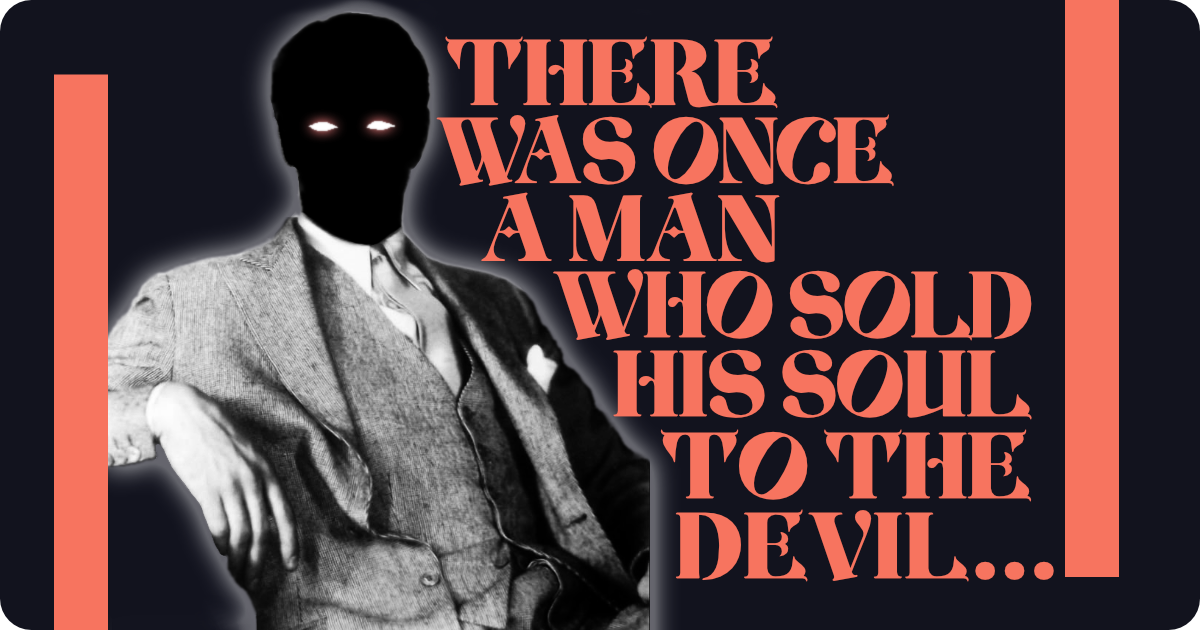
On one occasion, when he is in one of his more roguish moods — or, alternatively, one of his more serious moods — Allan relates to the sweet Christel a story which begins: “There once was a man who sold his soul to the devil…” Was this a metaphorical clue to the truth?
As the summer nears its end, Gérard and the other guests at the hotel gradually come to understand in an implicit way that Allan has come to this place at this time for a very particular reason. What that is, however, is incomprehensible to anyone. Yet the threat of it bears down on them all like a freight train, like the war that’s just around the corner.
(And given that Gracq was often akin to a surrealist, the idea of Allan — or Allan’s purpose at the hotel — being a kind of allegory for the coming second world war is not entirely outside the realm of possibility.)
Whatever Allan is, whatever he has come to the Hôtel des Vagues to accomplish, his presence is something that is inflicted upon the rest of the guests like a mythical ordeal, and this is not something of which he is ignorant. As such he embodies the role both of the sufferer and the one who wounds. He is observer and observed, alterer and altered. He is “both sides of the mirror”. The quiet inner anguish that befalls the hotel’s guests is his doing, but he is also a victim of the same inexplicable affliction. He is like the ouroboros, the consummation of whose purpose must be the very thing that produced it. Where does he begin and what is his end?
Julien Gracq is a master of quiet, poetic anxiety. With A Dark Stranger this anxiety builds to an unendurable tension that brings us to the final terrible chapters. The climax sneaks in like the frost to bring a cruel, indifferent end to the brief beauty of the summer. And Allan’s presence in the lives of Gérard and all the others will leave a wound that will never heal. This book, meanwhile, will remain with any reader who endures the leaden tension through to the end.

At the time of its publication, A Dark Stranger was given poor reviews. Viewed as too dark and too decadent, critics said it lacked substance. Some even took pains to point out that its decadence and its sumptuousness proved Stalin right when he decried “bourgeoisie” European literature1. It seems that absurd grounds for cancellation were already underway back in the 1940s. Though it has been translated twice into English, it is, to my knowledge, out of print. At least one translation is available to borrow on archive.org. But I personally encourage anyone interested in Gracq to pounce on any physical copy they can get their hands on.
If you enjoyed Balcony In the Forest, you will like A Dark Stranger. It has a similar feel, despite being denser and almost completely devoid of action. If you enjoy books that make surgical examinations of characters — and characters’ interactions with each other — this book will feel like it was written for you. If you like books that feature heavy prose, what some would call (erroneously) “purple” prose, you will like this book. Gracq’s descriptions are dense, florid, and worth the effort.
I recommend it, but only if you know what you’re reading. Gracq is challenging to anyone, but he is intolerable to a reader unprepared for the dense, lush nature of his prose and the slow, introspective nature of his plots. If you, for instance, enjoyed the writing of Donna Tartt in her The Secret History, there’s a pretty good chance you’ll appreciate what Julien Gracq was doing here.
Allan is an interesting character and Gracq challenged himself by attempting to psychologically explain this particular type of man and a particular shadowed bend of his singular personality. I personally believe he succeeded.
As mentioned by John Cournos in his 1950 review of the book for The Saturday Review.
I'm interested in reading more of Gracq's works. Balcony in the Forest had a profound impact on me. It felt like a wound you don't notice at first, but starts hurting when you lie down at night (and I say this in a good sense... ?)
Is A Dark Stranger as dreamlike as Balcony?
If you like French literature, I recommend checking out Statuary Gardens by Jacques Abeille. It's not as psychological as Both Sides of the Mirror (seems to be), but it is similarly profound in its philosophical pondering and its prose.
Trying to label it, I'd say it's a fantasy exploration series.