

The River Loves You
Malicroix by Henri Bosco, a gorgeous novel that might change you

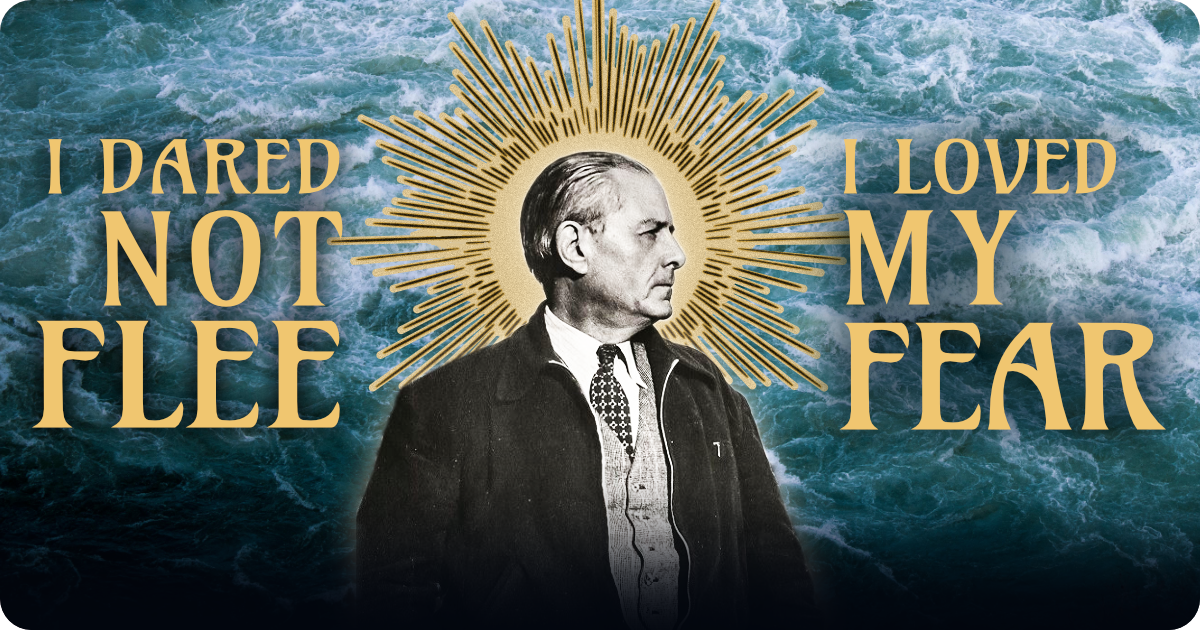
Henri Bosco, born in Avignon in 1888 and related, on his father’s side, to Saint John Bosco, was the only surviving child of his parents. He fought in World War I, survived, and married a woman named Madeleine with whom he would remain until his death. Besides writing several novels (and a biography of his relative Saint John Bosco) Henri also taught French, Latin, and ancient Greek. He was nominated for the Nobel Prize in Literature four times. In 1948 he wrote Malicroix which won the Prix des Ambassadeurs1. He also won several other prizes and honors during his career. In 1955, he and Madeleine bought a farmhouse in Lourmarin. They were both buried there. He in 1976, she in 1985.
In Henri Bosco’s novel Malicroix, his gentle narrator, the botanist Martial de Mégremut, observes that “Man is born—gains life—from his struggle.”2 This is the essence of this beautiful gem of a book.
Advertised as a kind of nature novel but with an air of suspense, it is that, but it also isn’t. Malicroix is, first and foremost, an intimately related story of transformation, and a most profound transformation at that. For that reason, from a literary perspective, this novel is one thing above all: one of the most extraordinary examples of character development you’re likely to come across.
This is not an exciting novel of derring-do, it is not an adventure story in which the characters explore the unknown wilderness and learn who they are in the grip of nature’s ruthless energies. If you expect that, you will be disappointed. Malicroix is the story of one man’s intense transformation while he is alone on a fragile island in the middle of a violent river. In fact, Gaston Bachelard said of this story that it is “an ordeal by solitude”, which, again, is and isn’t true.
This is meant to be a review, but I find this book so humbling that I believe it would be arrogant to “review” it. It is perfectly written; it is also not for everyone. Every chapter is a long, excruciating climb. Our hero began as a good man, but a soft one who did not know himself very well. By the time the final chapter ended he was someone else entirely. Better? Perhaps. But he was different, transformed, confident, scarred.
The story is simple: a young man, an orphan raised by his three paternal Mégremut uncles and their beautiful, loving families, receives word that his maternal uncle, Cornelius Malicroix, has died and left everything to him. He is compelled to travel to his uncle’s house to see to his estate. His gentle family urge him to reconsider, but he has long been fascinated by this mysterious addition to his blood, the Malicroix blood from his mother’s side, and “it is through our mothers’ blood that our passions flow into us and from which a strong line draws the distinctive trait that stamps its spirit.”3
The “estate” is La Redousse, a humble stone house on a lush, untamed island in the middle of the Rhône, in the desolate and wild region of the Camargue. It is unforgiving, cruel land. The river dominates it and the lives of anyone upon it. It can be a strange paradise and it can be hell. With winter approaching, the latter will be Martial’s first experience.
Once there he learns that he will inherit the land, the flocks of sheep, La Redousse, and the main, abandoned Malicroix estate on the mainland, but only (his uncle’s will insists) if he lives on the island for a period of three unbroken months. He must not cross the river. After this time he shall be given a final task, a test of sorts, the nature of which will be kept secret until then. Upon completion of this task all will be his.
In addition to the house, some simple huts, and some flocks of sheep, Martial has also inherited the services of a gruff old shepherd called Balandran. This shepherd had loyally served Cornelius and seems to dislike soft, young Martial. Yet, ever loyal to the bloodline, Balandran cooks for him, tends the fire, guards the sheep, but otherwise keeps to himself.
Within this simple premise there is the added complication that the Malicroix land and name come with a dark history. This history — and the land itself — have attracted others to our hero’s rough refuge on his solitary island. Others want the land and the house for themselves. Others want the inheritance. Others fear the Malicroix blood and hate it.
Besides Martial’s ordeal of transformation, there is also a story here. It is a human story first and foremost: the gradual bonding of Martial and Balandran. The simple, stoic shepherd comes to know “Mr. Martial” better even than he knows himself. And Martial’s reliance on him and trust in him is deeply moving.
But there is also the drama of malice. Others covet the Malicroix land and name. Before the book ends this malice will come to Martial — and Balandran — with terrible violence. He will be tested in every possible way. And no matter the outcome, he will never be the same.

Henri Bosco’s ability to plumb the depths of the human psyche is on the same level as Dostoevsky’s. Of course, Dostoevsky was Russian and Orthodox, while Bosco was French and Roman Catholic so it has a wholly different flavor. But as Martial de Mégremut (or Martial de Malicroix?) ruthlessly examines himself at every step of his painful transformation, I was blown away by Bosco’s ability to present with poetic beauty the most profound truths of the human condition:
“No two times of solitude are alike, for we are never alone in the same way. There are some singular people whose passage inspires in us a deeper, vaster sense of isolation once they have left us alone. The more they are themselves solitaries, the more their presence fills us; the more their absence leaves us empty. It may be that such people, created for the desert, attune us to the secret laws of solitude.”4
“I regained contact with an everyday, animal life, one of those warm lives you can stroke with your fingers—affectionate contact that restores the body to the soul. The soul rests against its body, finding it warm and soothing; the body, sensing the soul’s return, makes an even warmer place for it; and the two, joined one to the other, grow tender and sigh.”5
“And nothing to do—except roam or reflect. But one can only reflect with rigor for a short time; the mind soon wearies and begins to wander; then the imagination in turn weakens and one circles morbidly around a single, irreducible thought. A dull obsession saps the soul and fosters a fatal despair.”6
and so on.
Simple notions such as “love” and “trust” are conveyed in their most essential, and richest, meaning. If a man dislikes or distrusts another man then Bosco tells us he “does not love him.” If a man has come to respect, rely upon, appreciate, or trust another man, Bosco tells us, “he loved him.” This is the simplest idea in the world. And the simplicity of it gives it profundity. Like Dostoevsky’s Alyosha Karamazov, Bosco understands that love is a bigger, richer, more significant notion than romantic emotion (which is certainly one type of love, but not the only one). Love is a pledge, an expression of fealty, a declaration of responsibility. It is, in short, a bond.
When Balandran finally decides that inexperienced, untried Martial de Mégremut is trustworthy, when he chooses to trust him, Bosco tells us that gruff, old Balandran loved him. These three simple words — he loved him — arranged into this simple declarative sentence convey the essence of human bonds.
Other people are not the only recipients of Martial’s love. On one occasion he relates that he “loved [his] fear.” Viewed through the same lens as people, this indicates that Martial viewed fear as something to which he owed responsibility and as something he trusted. He had learned to trust and respect his fear and he had learned that doing so allowed his fear to serve him loyally.
Each weakness that had previously bound him was defeated by trust, self-knowledge, and love.
Do I recommend it? Absolutely. But only if you know what you’re getting yourself into. Prepare for an intensive vivisection, page after page of profound self-examination, prepare for the most poetic descriptions of wild, beautiful, terrifying nature you will ever read, prepare to care deeply about the wind, the strength of the fire, the sound of another person’s voice, the ability to know your own mind. If you’re prepared for all this, Malicroix will love you. And you probably won’t be the same by the time you’re done.
*A note on translation: Joyce Zonana’s exquisite translation of this difficult, lyrical book is flawless. I wish I could read the original French, but there were times while I was reading this book when it felt like another language, or the language from another world.
Here is my TBR book list, if you’re interested.
Here is my list of books I’ve read so far in 2026.
Here is a link to purchase the book from my shop on bookshop.org
A French literary prize established in 1948 and awarded to a French language work dealing with historical or political historical topics. Malicroix was the second recipient in the prize’s history. It still exists.
(all quotes taken from the NYRB paperback translated by Joyce Zonana) page 158
page 3-4
page 20
page 97
page 99
I'm intrigued, Hilary. I love books like this.
I recognized the last name, but I had no idea St. John Bosco had a relative who was a famous writer. This sounds marvelous, I'm putting it on my TBR right now.