


(The list below contains affiliate links to my bookshop.org storefront. If you’d like to toss a coin or two of support to your hostess, you can purchase through bookshop.org.)
An ongoing feature on this site, provided there is interest, will be a collection of stand-out media. I read a lot across a lot of mediums and topics, and I tend to watch somewhat obscure films and shows. This recommendation series will feature collections of some old and new (to me) standouts.

The Thief, by Fuminori Nakamura
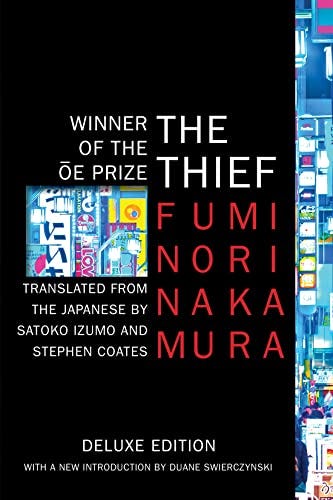
Some have taken to calling Fuminori Nakamura a Japanese Dostoevsky. There are certainly grounds for such a comparison. I’ve long thought that Dostoevsky was, perhaps, one of the first noir writers. And Nakamura certainly writes noir, but his work is decidedly philosophical. While it doesn’t — at least in translation — have quite the surgical depth that Dostoevsky has, it is nonetheless extremely insightful. The Thief was the book that put him on the (international) map, but he has written several celebrated novels before and since, including Last Winter, We Parted.
The Thief takes the reader along the somewhat bleak and aimless path of its eponymous pickpocket. Forced to participate in a home burglary, the thief finds himself at the center of a strange storm of circumstances that force him to reflect on his own moral and social choices. A likable character thrust into terrible situations, Nakamura’s thief is a worthy and capable narrator for a simple, but thought-provoking narrative.
Xeethra by Clark Ashton Smith
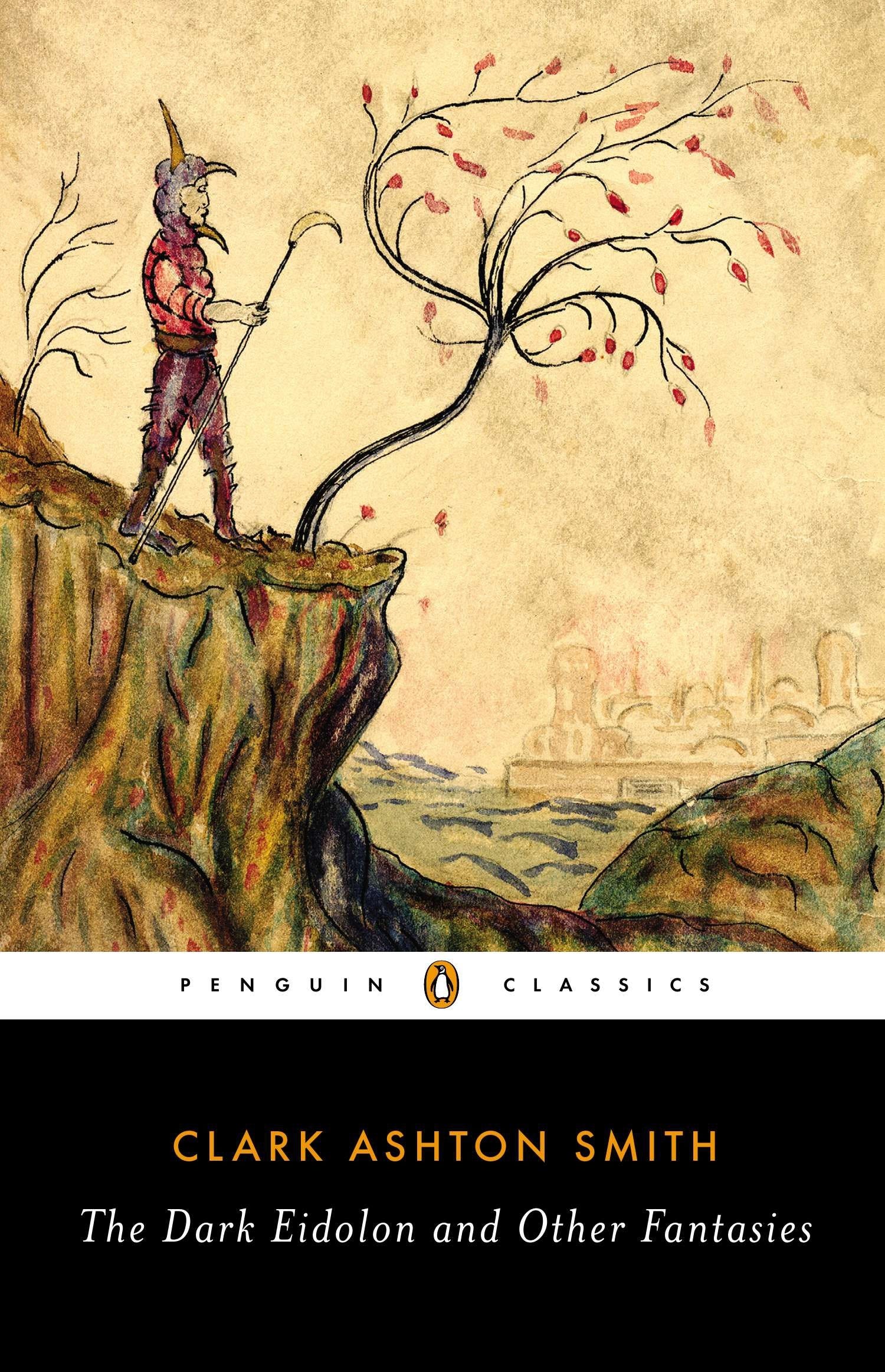
I adore Clark Ashton Smith, possibly more even than Lovecraft. Where Lovecraft usually grounded his stories in some variation on the real world, Smith almost always wrote entirely within fantastical settings. Each story is a brief glimpse into an entirely realized world and civilization. Some settings are granted more than one story, some are loosely connected across the millennia of a civilization’s lifespan. And some stories offer only the briefest flash of a brilliant, fascinating world.
Xeethra is part of Smith’s Zothique stories, which are set on a mysterious future continent. Zothique is, to those who keep track of these things, loosely but officially connected to the wider Cthulhu mythos. None of which is strictly necessary to enjoy these stories.
A humble little tale, Xeethra takes us on a dreamlike adventure on the shoulders of the shepherd boy Xeethra, who trespasses in a mythical, god-like realm and steals a bite of forbidden fruit. The gods who guard this garden then place upon him a blessing and a curse, fating him to roam Zothique in search of a vanished city.
No Longer Human, by Osamu Dazai
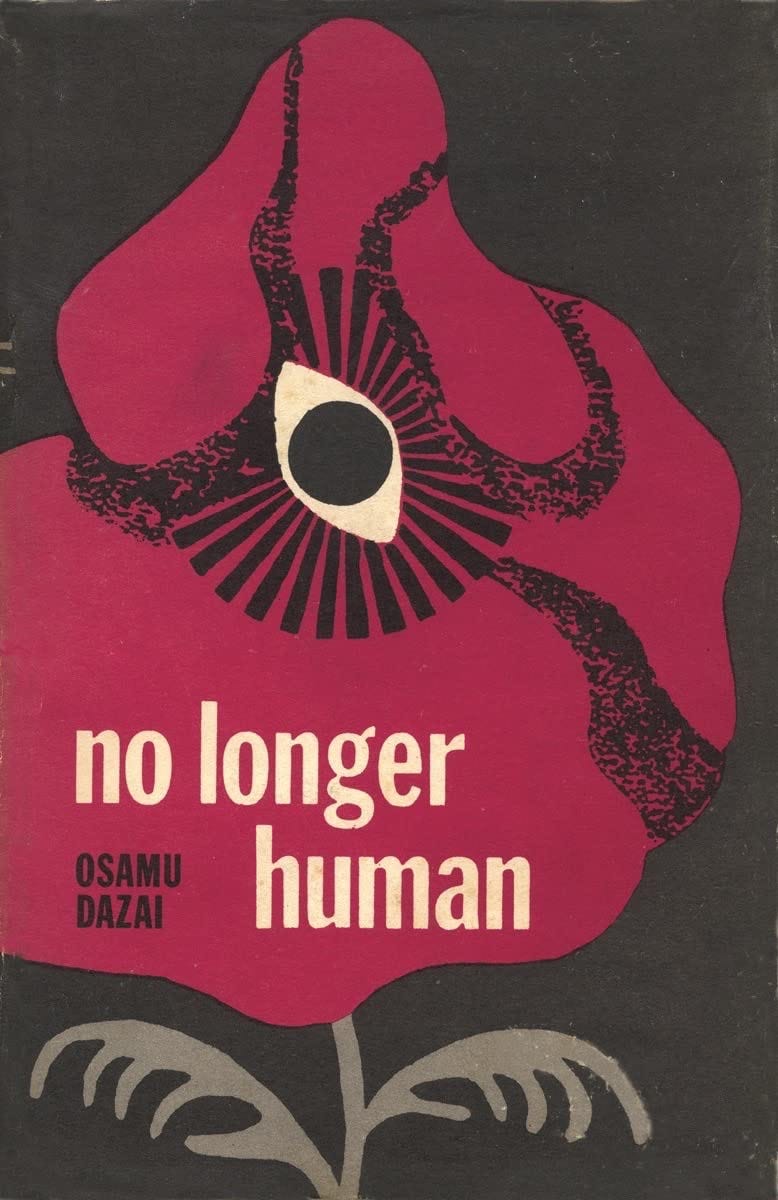
I only recently found this book on a list of required Japanese novels. Dazai is a writer of the type I like to call “observers”. Another example would be Salinger, and even early aughts-era Chuck Palahniuk (with Fight Club). His observations of Japan’s changing landscape in the early parts of the twentieth century represent some of the most compelling human examinations ever put to paper. Brutally honest, painfully insightful, and more than a little disquieting, Dazai’s semi-autobiographical novel is both beautiful and heartbreaking to read.
*Note: The edition I read — the New Directions edition pictured above — was translated by Donald Keene. I read a few pages of a few different translations, and this one was by far the most pleasing.
I Was a Stranger, by John Hackett
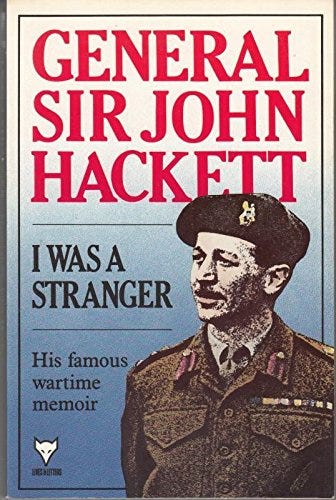
Taking place primarily in winter, this beautiful WWII memoir follows General Sir John Hackett of the British Air Force after he was grievously wounded by a mortar round and surrendered to the Germans for medical treatment. After miraculously surviving stomach surgery in terrible conditions, a network of daring spies then smuggled him out of the occupied hospital and stashed him in the house of four matronly sisters in occupied Holland. What follows is an engaging and charming (and often thrilling) tale of human kindness.
Bookshop.org does not carry this book, but Slightly Foxed sells a beautiful cloth bound edition.
One Day In the Life of Ivan Denisovich,
by Aleksandr Solzhenitsyn
The first time I read this book it was a particularly bitter February when several feet of snow had fallen over the course of a long, stormy week. The days were dim and gray and the nights were long, thick as tar, and viciously cold. I finished it while leaning over the stove for warmth, dipping bites of soft bread into a bowl of hearty chicken soup. I highly recommend reproducing these exact circumstances.
This book and the subtle lessons it conveyed have been vividly imprinted in my mind in a way that is inextricably linked with the cold darkness of midwinter.
This is also an excellent entry-point into Solzhenitsyn, for those who might be understandably a little intimidated by his more… intimidating work.
House of Leaves by Mark Z. Danielewski
One of those books that grew to be larger than it really is. One could say that House of Leaves is bigger outside its covers than it is inside. An excellent book told in a very engaging way, despite the endless, looping paths of narrative. I know it has a wildly overblown cult following, but it really is very good. It isn’t the typographic oddities that make it great, either. But rather the Borgesian stories-within-stories. The typographic fun is novel, but not very interesting. It’s the story itself that makes this book shine.
A young tattoo artist is gifted a manuscript and a trunk full of notes by a friend upon his death. The manuscript is the increasingly mad academic analysis of an infamous documentary made by a filmmaker. This film was originally begun to document the maker’s move into a new house with his family, until he realizes that the house is bigger on the inside than it is on the outside. When he discovers a path into the house’s “interior”, things really start to get interesting.
This storylines echo across each other. Navidson (the documentarian) makes discoveries that impact the lives of both Zampano (the dead manuscript author) and Johnny Truant (the tattoo artist). Time and reality slowly collapse around the three until all the remains is The House.
A wonderful, isolating novel that feels most at home in dark winter nights. Pair with a shot of something strong to really get the whole effect.
Hell Screen, by Akutagawa Ryunosuke
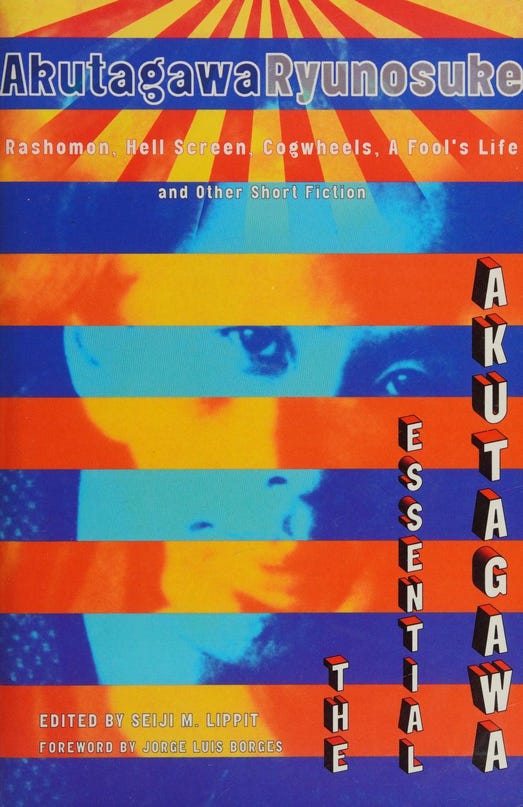
An absolute gem from the east, Akutagawa Ryunosuke (or in the western fashion, Ryunosuke Akutagawa) had a Borgesian flare to him that was nevertheless particularly Japanese. This short story, Hell Screen, recalls to mind the stories of Borges, Lovecraft, and others of the Weird tradition who would relate stories as if explaining a real and factual historical matter. In this case, the painting of an infamous screen depicting the horrors of Hell. The descriptions of this screen are reminiscent of the Hell panel in Hieronymus Bosch’s The Garden of Earthly Delights, but, again, particularly Japanese. And the story of how it came to be includes a chilling examination of obsessive human nature.

Everything I’ve read of Akutagawa has delighted me. If you can possibly get your hands on the edition I have pictured above, you will also be fortunate enough to read the wonderful forward by Jorge Luis Borges himself in which he provides the keenest possible observations on the meeting of East and West, particularly for Akutagawa himself.
If you can’t find that particular edition, you can read the forward here at archive.org.
Others:
The Brothers Karamazov, by Dostoevsky
Or anything by Dostoevsky
(The Russians are to be read in winter. I don’t make the rules.)
Invisible Allies, by Solzhenitsyn
Each chapter of this lovely volume is devoted to one of the many people who helped Solzhenitsyn during his life, from the woman who transcribed his books, to the many people who kept him hidden. Published only after their safety was no longer a question, this beautiful book is a grateful and loving writer’s tribute to the cast of nameless, faceless people who helped him throughout his trying life.
(A ship stuck in the ice…)
And in the spirit of Shackleton, why not try Oddsfish! by Robert Hugh Benson
This is one of the books that Shackleton had in his personal library, the contents of which he lent to his crew to keep their minds from agitation.
I spoke recently of The Aviator, by Eugene Vodolazkin. This is a lovely time to read him as well. The Aviator is a spiritual relative of One Day in the Life of Ivan Denisovich, as both involve the Russian condition, as well as insightful observations regarding Stalinist Russia.
If you’re looking for titles for younger readers, The Winged Watchman by Hilda van Stockum, about a group of children who rescue a wounded RAF pilot in occupied Holland during World War II, hiding him in a windmill, is a wonderful book for young people.
Articles and Essays
I Used to Know How to Write in Japanese
A fascinating personal examination by the author of his own decaying ability to write kanji, the Japanese script made up of logographic characters (like Chinese). The purpose of the essay was to explore the strange disconnect between being able to read Japanese and yet being unable to remember how to write it, not an uncommon phenomenon in logographic languages in our technologically-reliant age.
I’m not alone in this “character amnesia,” either. Whenever I tell a Japanese native about my lost ability, they all readily admit to having forgotten how to write many kanji, too. Apparently, this is a well-known phenomenon in Japan and in China. There is even a term for it, wahpro baka (ワープロ馬鹿), meaning “word-processor idiot”…
He doesn’t really get into the tech-reliance aspect of this, but focuses on the neurological, which is fascinating in itself.
Eugene Vodolazkin’s "The New Middle Ages"
The author of one of my favorite novels of all time (Laurus) has a way of speaking on Medieval matters with both clarity and almost childlike optimism. Taking the modern age’s woes and anxieties regarding authorship and the future of literature, he places them in a wholly unique context, comparing the emerging, modern thought on authorship to medieval ideas.
Some readers might (with good reason) bristle at the idea of “the death of the author”, but as always, Vodolazkin gently urges the reader to look at things from a different perspective. Elsewhere he has written on the false modern notion of constant progress, and on civilization’s more cyclical nature. If that is true than we find ourselves entering a new Middle Ages, though that might not quite mean what a person would expect. Nevertheless, perhaps that isn’t all bad. There are, after all, certain things about medieval thought and writing which might benefit the modern mind.“Nikolai Berdyaev divides epochs into days and nights. Days include antiquity and the modern age. They’re colorful and magnificent, and they go down in history as moments of explosive display. The night epochs—such as the Middle Ages—are outwardly muted but profounder than those of the day. It is during the sleep of night that what has been perceived during the day can be assimilated. A night epoch allows for insight into the essence of things and for concentrating strength. We are now entering such a time.”
All in all, a wonderfully thought-provoking read.
“The Animalization of Otaku Culture” by Hiroki Azuma
A fascinating examination of otaku culture by a Japanese philosopher who has been making some waves for his analysis of modern society (especially that which is involved in the telling of stories). He expounds on his notion of “databasification” of culture, which might be the single most apt description of what has become of culture in recent years. A brief and easily digestible read, absolutely worth your time.
“The Era of Ideals/Modernity formed a structure in which a grand narrative/ideal controlled the diverse small narratives throughout the world. Consequently, cultural criticism and social criticism consisted in analyzing grand narratives as reflected within the various small narratives (works of art and literature). In the postmodern, however, grand narratives have collapsed. What is emerging in their place is a new model that might be called ‘grand database.’”
“Scenes of a Russian Winter” by William Jay Smith
An absolutely delightful account of the author’s stay in Soviet Russia in the early 80s when he was a visiting professor. His observations are related with the elegance of a poet and are by turns somber, bizarre, frightening (just slightly), and charming. It is, of course, the people who are written of with the gentlest and fondest remembrance.
“The Writers’ Union oddly enough seemed the right place for a display of medals. On the staircase leading up to the auditorium there, one was reminded of their importance. On the first landing were displayed row after row of photographs of lesser-known writers wearing here and there only an occasional medal. On the second landing were the better-known writers, many of them much decorated. On the third and highest level were displayed the military writers, their chests festooned with decorations. Could it be that the surest way to literary success in this strange country was to join the Soviet Army?”
“The Murder of Leo Tolstoy” by Elif Batuman
A strange and wonderful essay written to describe the author’s stay at Tolstoy’s house during a conference of writers specializing in the man himself. Batuman had received a grant to attend the International Tolstoy Conference by presenting her hypothesis that Tolstoy had, in fact, been murdered. Though an earnest investigation was indeed carried out, the majority of this essay is centered on the colorful cast of characters encountered in the home of the literary legend.
I enjoyed this essay tremendously. Beautifully written and with a great deal of information about Tolstoy’s later years delivered in digestible bites in between passages describing Batuman’s investigation and her observations regarding the other writers at the conference.
Thanks to this post, I started to read Fuminori Nakamura. I listened to the audiobooks for “The Thief” and “The Boy in the Earth” (in one day), and I enjoyed them immensely. I’m an American expat living in Japan and I’ve been studying Japanese for a long time, but I admit that I’m not well acquainted with Japanese literature. I read a bit of Akutagawa in university, but at that time I wasn’t impressed. I’m willing to give it another shot though! Also, today I bought the original Japanese version of Nakamura’s latest novel “His left arm is a snake” and I’ve already started reading it. I’ll have to let you know if his untranslated writing is on par with Dostoevsky! Thanks for sharing.