


Modern moral thought is needlessly complex. Complexity has taken the place of nuance, presenting a state of moral grayness which, though purporting to be complex, is actually childishly simple: It’s mean to say that someone is bad.
Within the realm of criminal matters, this takes a more specific form:
It’s mean to punish people.
This attitude — both morally and judicially — has, naturally, permeated storytelling. Films and series in which criminals are either shown to have been more morally upright than the heroes, or in which the criminals are given a second, third, fourth chance to Do The Right Thing are far more common these days than stories in which criminals are punished, roll credits. And while it might seem harmless — and even socially beneficial — to portray bad guys reforming, the issue arises not in this itself, but in how the reformation occurs. More often than not, a villain experiences a change of heart only when someone is nice to him. Anyone who has ever come face to face with evil understands that this is painfully childish. Yet, the repeated fictional reinforcement of this idea instills in people the idea that kindness is morally superior because it delivers results while avoiding the barbarism of harsh punishment.
Because for writers to whom punishment is simply too mean, any system that avoids the prickly act of meting out uncomfortable justice must be shown to be not only successful but superior. It must be presented as morally more progressive, psychologically less barbaric, and socially more effective than “mere punishment”.
In the 2013 Japanese film The Brain Man (based on the Edogawa Rampo award-winning novel of the same name by Urio Shudo1) the full reality of this needless complexity is presented with disturbing clarity.
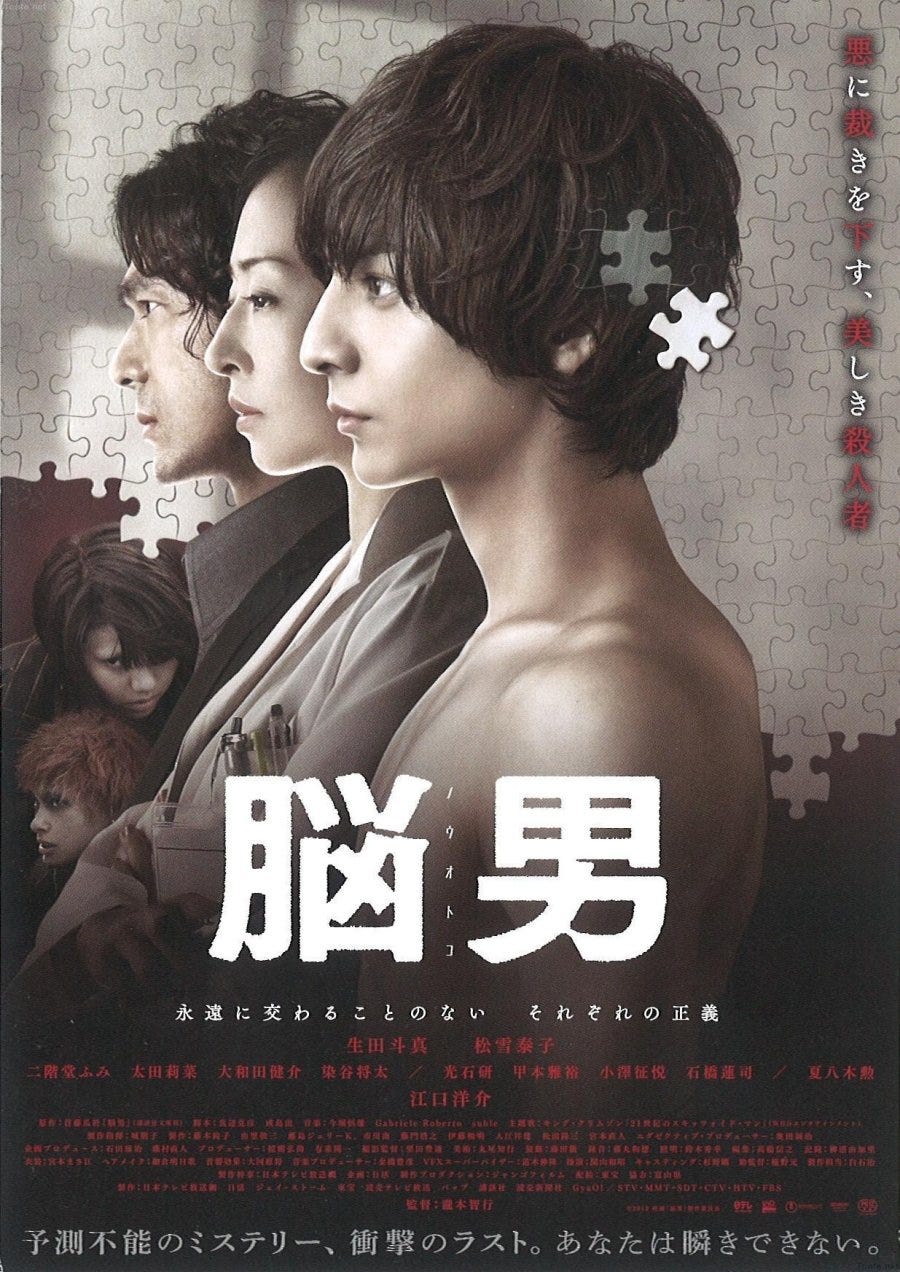
This story functions as a mystery tale, but is, in reality, an ambitious philosophical examination of the following social observation: “we’ve made society so morally complex that when we need to access the simple solution to a simple problem, we’re no longer capable of it”.
As such, it isn’t well-suited to a mere film and so the various threads of these ambitious themes are occasionally knotted or aren’t entirely followed through to the end. However, this isn’t meant to be a review of this flawed film, but an essay about the fascinating moral landscape it painted within its uncomfortable story. As such, there will be spoilers.
There are three entire plots at work here. The first is a simple cop drama in which the police are hunting a mysterious serial bomber. The second is a tangent examining the background and formation of a man who was one of the chief suspects in the aforementioned plague of bombings. The third is a sociological fairy tale in which a psychiatrist basks in the success of her life’s goal: reformation through pure compassion.
Thematically, these three stories coincide and interweave quite well. In a sense, they represent three different modern approaches to moral justice.
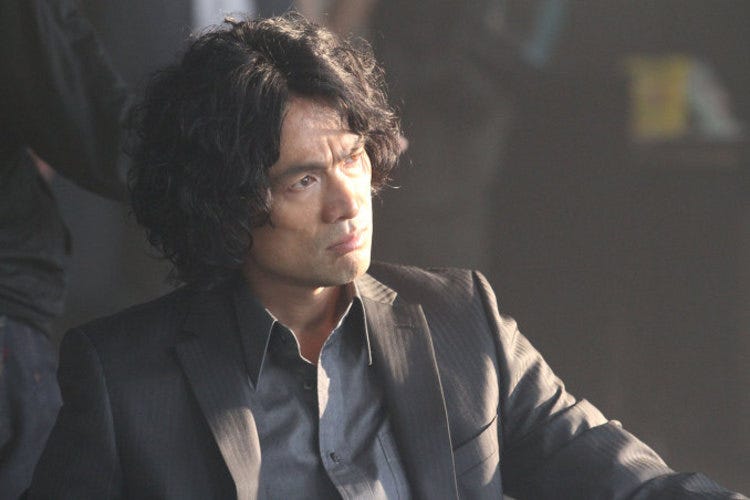
The first storyline presents the standard police approach, represented by Detective Chaya, a grizzled, irritable police detective who has been working tirelessly to find and stop a serial bomber using primarily old-fashioned means: investigation, legwork, and gallons of bad coffee. He serves The Law and believes staunchly in a rigid judicial system by which criminals are captured, tried, and then sentenced according to established laws and overseen by established authorities.
The second storyline offers a very modern approach, both in terms of technological advancement and in terms of modern society’s philosophical and emotional mindset towards morality and criminals. In this one, a psychiatrist has been attempting to establish widespread implementation of her criminal reform methods, which consist in, primarily, the use of total compassion and empathy to emotionally break down and then rebuild hardened criminals. Her approach to justice eschews the entire concept of “punishment” in favor of empathy and love.
In the third storyline we are shown a system of justice that has probably experienced the longest lifespan of any of the three. It is absolute. Horrible criminals are met with simple death. The eponymous “brain man” is a (seemingly) emotionless weapon aimed at criminality. If he finds a murderer, he kills him. There is no room for nuance, no space for negotiation, no interest in reform. He doesn’t hesitate, and, because he is brilliant beyond any analyst’s ability to measure, he is also never wrong.
The film effectively puts these three philosophies of justice in the arena of the real world — film real world, but you get the idea — to see which does the most good.
Perhaps you can guess the outcome.
When we say “does the most good”, there are two primary “goods” which need to be considered. The first is obvious: which method prevents the most crime? The second is a bit less obvious, but still a very real factor: which method is most able to provide healing and closure to victims?
The focus of this essay is primarily going to be on the latter two methods of justice: the psychiatrist — and champion of kindness — Mariko Washiya, and the emotionless “brain man” Ichiro Suzuki.

Dr. Washiya is a woman living constantly on the edge of an annihilating blade, who has made it her life’s work to embrace the knife’s edge by refusing to acknowledge its existence. She is a woman tortured by a tremendous need for justice, for closure, but who has, for reasons we will examine, chosen to hinge her survival on its refusal.
One of the more compelling periphery details about Dr. Mariko Washiya is a thread of intense selfishness, but one which is the perpetuation of a cycle. Herself the victim of selfishness — she is forced to care for her morbidly obese mother whose maternal concern for her daughter is limited to the hope that she’s always around to tend to her many needs — she is herself now motivated mainly be selfishness. Her motivations when it comes to criminal reform and justice are exclusively self-serving.
Dr. Washiya’s desire to implement a program by which criminals can be reformed by pure compassion seems, even in the first scene in which she appears, to be motivated not by a desire to actually reform criminals, but rather by a desire to mitigate the trauma and depression suffered by the surviving family members of the victims. That is to say: herself.

Several years prior to the events of the film, she had lost her much younger brother. He had been tortured, sexually assaulted, and then murdered by a pedophile who was himself a juvenile. The trauma and grief of this loss consumed and controlled her. But, despite her flaws, she was a resilient woman, and so she redirected that trauma and grief into a kind of monumental denial. For several years she had been undertaking to prove that the worst criminals imaginable — pedophile murderers, for instance — could be reformed by pure kindness. Her glowing test case, her proud success story, was the reformation of the very man who had killed her brother.
As the story began, this young, remade man was about to be released and was, by all accounts a completely different person from the monster who murdered a child in the most horrific way imaginable; he stood as the living proof that her method works. He was proof to all of society that punishment itself is barbaric and unnecessary, because kindness can actually mend the broken morality of a hardened monster.
And, she insisted again and again, overcoming the emotional urge for justice was a far more effective balm for healing than any kind of judicial or extra-judicial retribution. She had transcended her grief and her hatred in her god-like reshaping of the monster who had destroyed her and destroyed her family.
Yet, she was a woman living in muted agony, every day a battle for survival. Her darkened home was occupied by the growing, malignant hatred of her depressed mother. Her own darkened mind was occupied by the horror of what had befallen her brother and the daily retraumatizing she inflicted upon herself by attempting to reform his murderer.
In a sense, Mariko Washiya was the horrific final form of suicidal empathy.

Let’s step away from Dr. Washiya and her shining success case for a moment and look at her mirror opposite, her social and philosophical counter, Ichiro Suzuki.
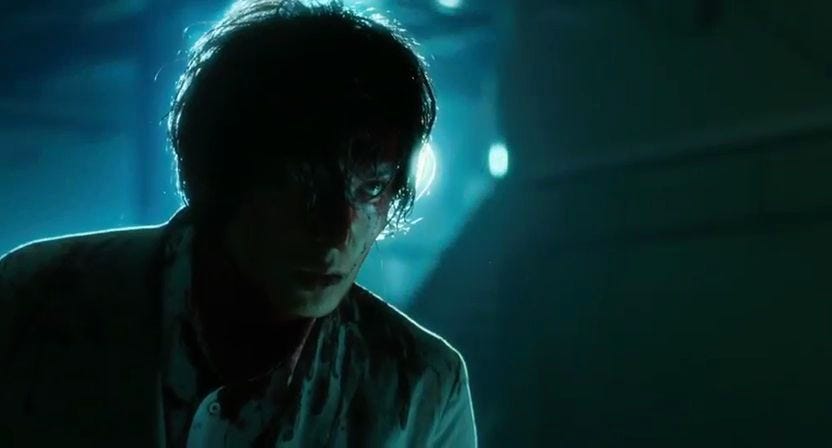
Ichiro Suzuki was wholly other from anyone else in the cast, and even from most other people in existence. As a character, he was difficult to analyze mainly because he himself never felt the need to explain himself. All we could know about him was the combined observations of the people with whom he interacted.
As a child he had been found to be quite out of the ordinary. Called by his doctor “an abandoned doll”, he appeared to be a kind of blank slate. Resistant to pain, seemingly devoid of emotion, indifferent to stimuli, and perfectly obedient, he would do nothing without instruction, not even use the bathroom or eat. Taken in by his wealthy grandfather after the deaths of his parents in a hit-and-run, his upbringing was meticulous and thorough. In the course of his education, Ichiro’s grandfather recognized that the boy had a seemingly infinite capacity for intelligence in addition to his infinite docility and resistance to pain.
However, the relative peace of this childhood was shrouded always by the pall of grief. The man who had killed Ichiro’s parents in a hit-and-run had never been brought to justice and so for his grandfather the wound remained always open and raw. As the pain grew more intense, he decided to refocus his unusual grandson’s education to provide him with a particular set of skills.
His grandfather recognized in Ichiro an unusual and particular combination of traits that seemed to have cosmically aligned to create the ideal warrior for justice: His unusual strength, agility, and resistance to pain made him uniquely suited to physical combat; his photographic memory and incredible intelligence gave him sharp observation skills and keen instincts; his perfect obedience and docility made him capable of carrying out difficult and unsavory tasks without hesitation; and his lack of emotions made the strain of killing relatively easy for him to endure.
The old man’s grief or madness had convinced him that his strange, but somehow angelic grandson had been formed into the ideal soul to become the perfect arbiter of justice. Ichiro was, his grandfather told him, meant to rid the world of filth and evil. And so he began to focus his education on making him an efficient killer while also instilling in him a sense of duty and of right and wrong.
It’s here that we recognize the first major point of digression between Ichiro and Dr. Washiya. Ichiro had been taught that dispatching horrible criminals was an aspect of morality. More than that, he was taught that it was controlled by morality. That is, it was actually immoral to overlook injustice.
Dr. Washiya, on the other hand, had convinced herself that it was immoral not to overlook injustice.
Ichiro’s first justice-driven execution was somehow ironic. After years of hoping and praying that his grandson would choose to take up the crusade for justice, the old man was shockingly, even coincidentally, killed during a home invasion robbery.
Ichiro calmly killed the robber.
And then he disappeared entirely.

Some years later, Ichiro entered the film’s story as a suspect arrested by Detective Chaya on suspicion of being one of the serial bombers he and the rest of the police force had been trying to find.
Once in custody, Ichiro was a baffling prisoner; he wouldn’t speak except to give his name and other incidentals, he wouldn’t explain himself, he wouldn’t answer questions or even acknowledge the officers questioning him. He was unmoved when threatened with the death penalty, uninterested in the gawking eyes of the press. Given the overall strangeness of his behavior and the nationwide publicity of the case, the police decided to preemptively have Ichiro assessed for mental fitness to stand trial. For this, he was taken to a hospital where Dr. Mariko Washiya was placed in charge of his evaluation.
And thus our two mirror opposites, our two wholly different approaches to justice and the entire concept of moral reform, found themselves sitting across a table from each other.

Ichiro Suzuki’s evaluation period was an interesting one. He behaved in ways that couldn’t be comprehended by anyone. Docile and polite most of the time, at other random moments he seemed to snap. On one occasion he brutally attacked a fellow prisoner. What the police — and Dr. Washiya — did not know was that the prisoner attacked by Ichiro had been a violent, unrepentant murderer whose crimes had gone undetected.
After the attack, Ichiro immediately went back to being a polite, docile inmate.
Dr. Washiya, fascinated by the juxtaposition, spent a decent amount of time making an honest effort to understand her unusual patient. Eventually she found a clue to his identity and began to pursue it in an effort to learn more about his past. For this, she enlisted the help of Detective Chaya.
They tracked his background all the way to some of the teachers who had been hired by his grandfather, who told them what they knew all the way up to Ichiro’s disappearance after the death of his grandfather.
Detective Chaya then took up the threads of the investigation. Soon after, he discovered a pattern of murders: horrible criminals who had escaped justice had been summarily killed. Perpetrator unknown.
Ichiro had indeed chosen to take up his grandfather’s crusade. Why he chose to do so was never explained, almost entirely because Ichiro never seemed to feel the need to explain himself. He had no interest in “reputation” or in the opinions of others. But whatever the reason, his finely-honed skills and innate intelligence had combined to give him almost psychic instincts by which he could identify a murderer by little more than body language. And he was never wrong. He was a walking, talking one-man judicial department: investigator, judge, and executioner.
It was around this time that the police realized that Ichiro was not the serial bomber, but had actually been hunting the serial bomber.
Thereafter, Detective Chaya — to his credit — found himself struggling with his assessment of Ichiro’s morality. He was a murderer. But he was killing the worst criminals imaginable, criminals who could not be caught or tried due to some judicial loophole or shortcoming. His inability to formulate a solid opinion regarding Ichiro’s rightness or wrongness unsettled him for the rest of the story.
Dr. Washiya’s reaction to everything they had learned about Ichiro was very different. She experienced a kind of deep, aching horror to learn of the young man’s particular formation. How awful, she thought, to have been formed into a murderer, someone forced to kill criminals. Perhaps, she thought, she could save him from that terrible, terrible fate.
Her tendency to project her emotional reality onto others had been demonstrated throughout the film. Even when Detective Chaya expressed an impassioned desire to see the serial bomber punished to the fullest legal extent, she accused him of letting his emotions get the better of him. This is a common argument of the clinically kind: that kindness is inherently non-emotional, while all other reactions are excessively emotional.
The reality, which I’m sure most of you know, is that kindness is exclusively emotional, but it is also, by far, the easiest emotion. Kindness does not even necessitate forgiveness, as forgiveness presupposes some kind of judgement. Kindness exists and thrives best in an environment in which moral judgements simply are not made. Anger, rage, forgiveness, even mercy all require moral judgement. Kindness does not.
She had been kind and therefore superior when she had taken it upon herself to reform the young man who had killed her brother. She couldn’t understand the mentality of a person who was choosing not to be kind. Surely, she seemed to think, if Ichiro had the choice to not kill, he would prefer that. After all, isn’t it nicer, more pleasant, less horrible, to just be kind? And, too, she seemed to say, being kind works.
On the last day of their contact with each other, in an effort to “break through” to Ichiro, Dr. Washiya told him the truth about her brother and about the young reformed pedophile. In this final conversation, in the course of her startling revelation, she presented to him what she believed to be an unsolvable moral quandary: she couldn’t bring herself to kill the boy who had killed her younger brother; could he kill a child who had killed a child?
To her, the acts were identical. Killing a juvenile pedophile was the exact same act as a pedophile killing a young boy. To her, the idea that Ichiro had been “forcibly” made into something that would do the former made him effectively no better than the latter. And as she had already saved one of those, now she could just as easily save another, surely.
Furiously, desperately, frantically she tried to convince him. “You don’t have to do it anymore. You don’t have to kill anymore.” Her desperation in this moment is profoundly telling.
In storytelling we learn that in all conversations — especially major, climactic conversations — each person in the conversation must have some goal they’re trying to accomplish. Listening to Dr. Washiya, it was clear that there were two goals at work in her mind: the goal she thought was motivating her, but then beneath that simmered the truth.
To her, she was desperately trying to save Ichiro from a life as a murderer.
But simmering beneath that was her desire to pull him into her moral fantasyland, like the crabs in the bucket who stop their fellow crabs when they try to escape. It was clear to her, on an instinctive level, that Ichiro had tapped into a more primal, more true understanding of human nature, and that knowledge had allowed him the kind of mental and spiritual freedom she simply could not access.
She perceived in him a strength greater than her own. But she also perceived something else: he had the courage and the will to kill violent, monstrous criminals, including the one who had killed his grandfather, and the one who had killed his parents in the hit-and-run. He had had the will to exact justice. For him, the ledger was easy to balance. For her, there was no closing of accounts. The way she clung to kindness, the way she refused to pass judgment, the way she, in a sense, clung to the killer who had murdered her brother kept the wounds open both for her and for her depressed mother. She knew this and yet couldn’t make herself alter course. To her, it wasn’t fair that he was permitted simple justice while she had to toil under the weight of society’s mandated law of kindness. This was particularly evident when she admitted to having desired to kill the boy who had killed her brother.
“But,” she added automatically, almost like a programmed response, “killing him won’t make any of the wounds we suffered disappear.”
Which brings us to the second issue in all talks of justice: which method makes us feel the best? Another hallmark of the modern approach to morality, the most important element is how it makes everyone feel. If vengeance doesn’t make us feel better then it is inherently worthless. That is, to her and many like her, the fact that harsh justice can’t erase trauma meant it had no social or moral value.
Yet, she (and many like her) had convinced themselves that kindness could erase trauma. But everything about her was proof that this simply was not true. She was a woman imprisoned by her trauma, imprisoned by the faux-moral laws she had set for herself and by which alone she was permitted to find peace.
And when Ichiro refused to answer or even acknowledge any of her claims to moral superiority, she continued by congratulating herself. She had counseled the murdering boy. She had reformed him. She had fixed him. Earlier in the film, she had smiled when she had been compared to God.
But then Ichiro, still without answering, was led away and Dr. Washiya was left behind.
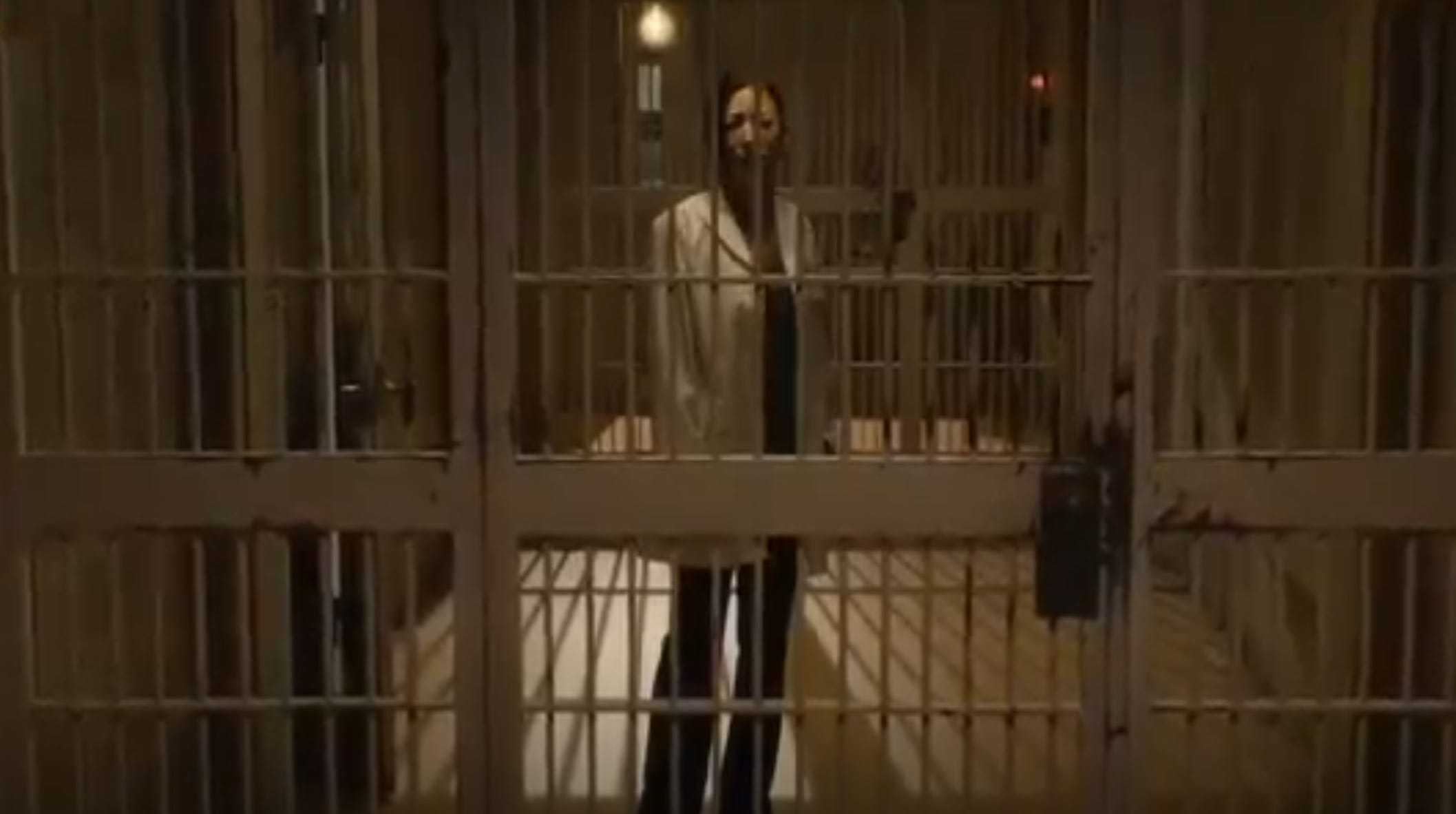
Not long after, the reformed pedophile was released and sent happily on his way, eager to start his life over again. The action of the film then focused on Ichiro’s escape and the final showdown between him and the serial bomber.
But at the very end of the film, Dr. Washiya was contacted by Ichiro who informed her that he was going to kill her reformed pedophile. Why he bothered to tell her was not posited by the writers or the characters, but my assumption is that however little emotion Ichiro might have had, he did have reason. And his reason told him that Dr. Washiya needed to understand that her method did not work.
He forced her to see this for herself when he sent her to the reformed pedophile’s house where she found, next to the young man’s dead body, a little boy tied up naked in a cabinet.
No, Dr. Washiya. Kindness cannot fix a pedophile. Pretending it can in order to make oneself feel better is the epitome of barbaric cruelty.
In a pitch-perfect twist to her entire philosophy, Ichiro informed her that he had corrected her mistake — by killing the released pedophile — as an act of kindness to her to repay her for treating him with compassion.
The kindness of Dr. Washiya would have brought about the horrific death of yet another innocent child. The “barbaric” cruelty of Ichiro Suzuki saved his life. This is the paradox of kindness; more often than not, its fruits are far crueler than those of cruelty itself.
And so, after years of labor and pain and denial and cognitive dissonance, Mariko Washiya’s life’s work was put in a body bag and she was left even more hollowed out than she had been on the day they showed her her brother’s dead body.
After, Dr. Washiya railed at Ichiro: “You’re not God! What kind of evil merits death? No one gets to decide good and evil; nor do they have the power to pass judgement.” But after all of this useless, moralistic cope, in the end she said weakly: “You destroyed everything I built.”
But what had she built?
Earlier in the film, in a moment of naked rage, she had admitted that she had not treated the pedophile in an effort to reform him, but because she had wanted to make herself feel better.
The “everything” that Ichiro had destroyed was, very simply, the house of cards she had been using as a scaffolding for her own coping mechanism. Ichiro had showed her, had forced her to really see, that her profoundly selfish adherence to kindness had been worse than fake, it had been criminally malicious.
This is not a difficult matter to a mind unhindered by the social complexity of moral “nuance”, a useless word in this instance, which does not indicate nuance but only cowardice or idiocy. Ichiro Suzuki — and the writers of this film — knew instinctively that compassion does not cure evil. Most of us know this. Kindness cannot fix something broken. Kindness and compassion are rooted in emotion and thus are fleeting, as are their effects. A bit of brief remorse brought on by emotion is not enough to mend the broken moral foundation of someone who abuses and murders children. Ichiro knew this, because Ichiro did not face evil with emotion, but with the simple logic of right and wrong, cause and effect.
Yes, it’s mean to kill a killer. But to Ichiro the arithmetic was simple: kill the killer, or let him go so he can kill more innocent people. Which of these is truly mean?
There is a subset of law-abiding citizens of every nation and culture who find it fundamentally impossible to accept that some people are just bad. Perhaps something could have prevented that outcome, but nothing can change that state once it’s reached. There is a newer and growing subset of law-abiding citizens who find it barbarous to mete out any punishment, as if we are somehow “better” than the criminals over whom we stand in judgment and to punish them would make us “no different”. Perhaps we are better than them, perhaps we aren’t. But Ichiro Suzuki would argue — if he even bothered to argue at all — that kindness has nothing at all to do with this equation.
However, this strange philosophical precept has made it into modern storytelling on such a wide scale that it seems like people at large have begun to take this fallacy for granted.
The simple, uncomfortable reality was that Ichiro’s sense of right and wrong was much, much stronger than Mariko Washiya’s. And that of most of the civilized world.

While all the rest was going on, the story of the teenage terrorist added yet another layer to the idea of kindness.
This young woman, introduced at the very beginning of the film, was a sadist. A deeply sick person who reveled in the pain of others and believed it was her God-given right to kill and maim as much as she possibly could. She believed she was a higher being and so exerted her superiority by inflicting pain.
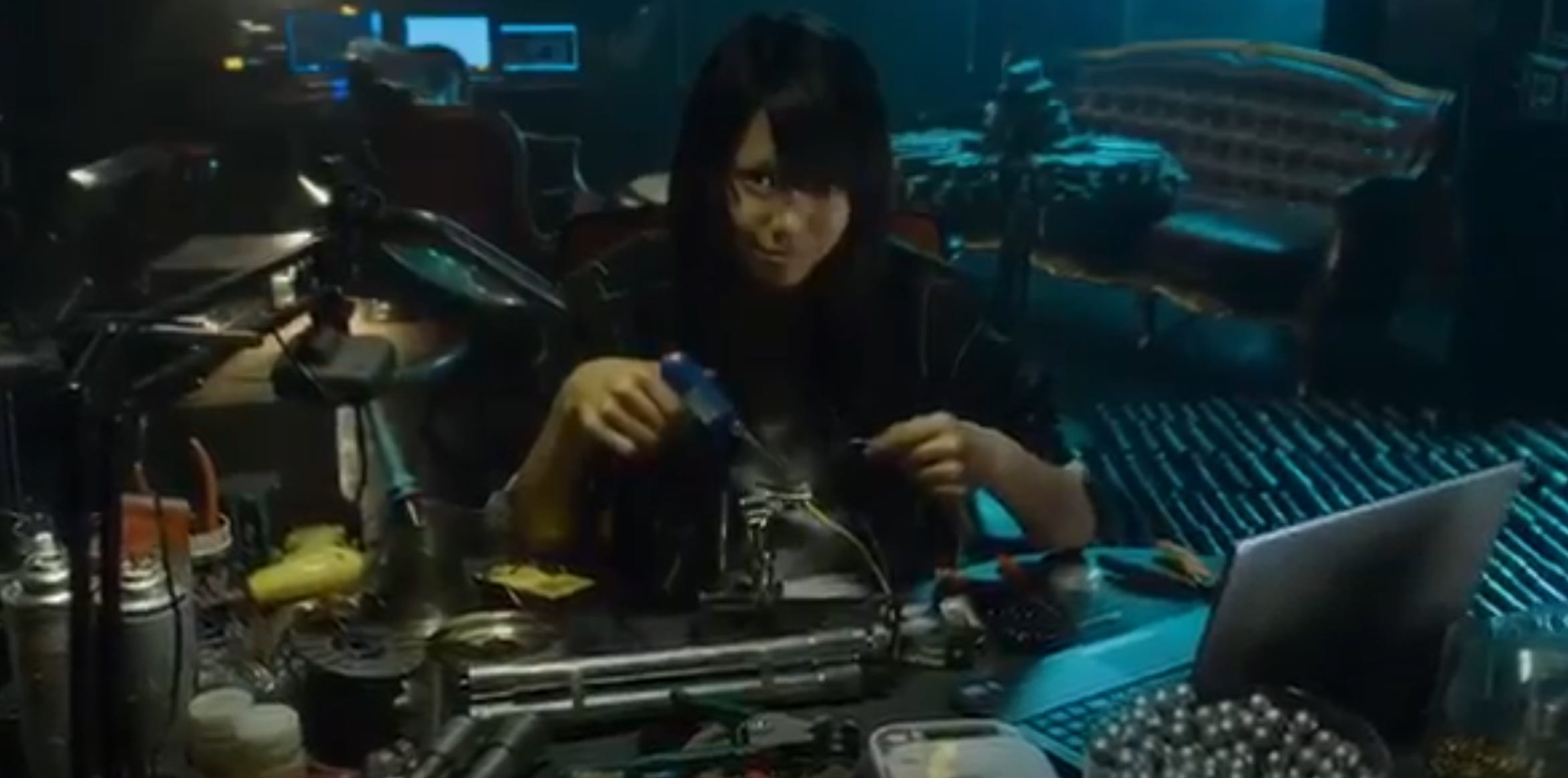
Presented as a double of Ichiro Suzuki, her existence asked a different set of uncomfortable questions. In time it was learned that she had had a very similar upbringing to his. Raised in wealth, surrounded by softness, kindness, attention, devoid of most emotions, and unusually intelligent, she actually had a distinct advantage: her upbringing had not been peppered by profound loss, as had Ichiro’s with the loss of his parents and grandfather. By all accounts, she should have just as easily become another crusader for justice, instead of descending into sadistic, chaotic psychopathy. But this was not the case. Reveling in her detachment from morality and consequences, she deemed herself superior to Ichiro who was beholden to a moral code.
Which, in a sense, made her much more similar to Dr. Washiya who also believed herself superior to Ichiro’s difficult, strict moral code.

After everything seen and heard, Dr. Washiya still begged Ichiro Suzuki not to kill this sadistic serial bomber, even after she had tortured both of them at length and killed countless people by bombing a hospital, laughing all the while.
The thing is, if Ichiro Suzuki had “won” by killing the teenage terrorist, that victory would have torn down the lies Dr. Washiya had spent years using to protect herself. Justice actually meant nothing to her. Nor did the feelings of Ichiro Suzuki. The only thing that mattered was her own feelings. Stopping a sadist from continuing her reign of terror was not important. Had the girl escaped and continued to kill, Dr. Washiya would not have had any difficulty sleeping at night.
But letting Ichiro kill the girl, letting him prove that there really was a simple solution to problems like these — legality or illegality aside — meant that all the pain she had put herself through after the murder of her little brother had been pointless.
In the end it was Detective Chaya who both executed the teenage bomber and let Ichiro Suzuki go. The grizzled servant of The Law had at last come to understand and accept the reality of human nature and society.
This reality, which he and Ichiro knew and which Dr. Washiya refused to acknowledge, was that her desire to “save” Ichiro from a life of hunting and killing was not noble or morally superior, but that it was something she wanted for herself.
Ichiro understood that his work was necessary. Detective Chaya understood that his work was necessary. Dr. Washiya couldn’t endure that because it flew in the face of her belief that kindness was the only way to make the pain go away.
Ironically, after Ichiro Suzuki killed the pedophile who had murdered Dr. Washiya’s brother, her mother finally decided to unearth herself from her prison of depression. In the end, ugly, mean, absolute justice did make some of the pain go away.

Is this essay nothing more than five thousand words on the merits of vigilante justice? Not at all. The great thing about difficult, challenging storytelling is that it makes us consider difficult, challenging things.
Dr. Washiya is not the only person in the world who was raised to believe that being kind and compassionate were good things. Many modern societies are overrun with this supposition. And while it is true that kindness is good and compassion is a virtue, their merits are often so overstated that we, as human beings living together in communities, no longer accept the fact that other options might be better in some situations.
A good story well told can force us to take a step back from ideas that we have spent our entire lives taking for granted. This is, in some ways, the entire point of literature. A million other books and movies have been published that present situations in which kindness and compassion won the day. But the writers of The Brain Man (book and film) sought to challenge that idea in a way that made their audiences think.
So, tell me: what do you think?
The Edogawa Rampo Award is a literary award for mystery novels. I would literally pay someone to translate this novel into English for me.
I find that sin can sometimes be described as an excess of something that when done in moderation is considered by most virtuous. Wrath can come from an excess of justice, Pride from an excess of confidence, and Envy from an excess of consideration for your neighbor. I wonder if sloth can be manifested from an excess of kindness. From your description of the events of the movie, it seems as if the doctor’s favored outcome is to do nothing when it comes to most situations.
Thanks for the article, a fascinating read. I tried my hand at writing a similar article but framed it as "mercy without justice." Naturally, leave it to a story to form a much more compelling case. Not all is lost however. It's a very nice reference for my own use.
I remember many YouTube critics praising the three main villains of "Puss in Boots: The Last Wish." Many appreciated the villainy of Jack Horner, who, much to the dismay of Jiminy Cricket, is a completely irredeemable PoS without a tragic backstory. A strange amnesia regarding intrinsic evil drips from many contemporary stories, no doubt related to the ignorant ideal that "we can nurture our way out of nature." I wonder if this is a feature of a corrupt and coddled perception of 'love and compassion' which seems to pervade post-Christian Western civilization.
To paraphrase Chapter 4 of "The Problem of Pain" by CS Lewis, "for about a century we have tunnel-visioned on the virtues 'kindness or mercy,' that most of us do not feel anything except kindness to be really good or anything but cruelty to be really bad...the real trouble is that 'kindness' is a quality fatally easy to attribute to ourselves on quite inadequate grounds. Everyone *feels* benevolent if nothing happens to be annoying him at the moment."
CS Lewis calls this attitude a "covert propaganda" for cruelty, and this seems a fitting description for Dr. Washiya.
It's often been said, through the villain with good intentions, that "the ends do not justify the means." With the perceived collapse of Western civilization (our deeply unserious circus of geriatric institutions and politics), I think stories which ask, "do the means justify the ends" will grow in salience, as seen with Andor, Puss In Boots:TLW, and The Brain Man.